Let’s be honest about something most restaurant owners already know but rarely say out loud: DoorDash and Uber Eats are quietly bleeding your business dry.
Every time a customer orders through one of those platforms, you hand over anywhere from 15% to 35% of that order in commission fees. On a $40 order, that’s up to $14 gone — before you’ve paid for ingredients, staff, or rent.
Now multiply that by hundreds of orders a month.
That’s not a delivery fee. That’s a tax on your own customers.
The frustrating part? Most of those customers would order directly from you if you gave them an easy way to do it. They’re not loyal to DoorDash. They’re loyal to your food. The platform just got there first.
This guide is about changing that. You’ll learn exactly how restaurants are cutting third-party commissions, building direct ordering channels, and keeping far more of what they earn — using a modern QR ordering system that makes the switch painless.
Table of Contents
- The Real Cost of Third-Party Delivery Commissions
- Why Restaurants Need a Direct Ordering Strategy
- Top Benefits of Owning Your Own Ordering Channel
- Key Features to Look For in a Restaurant Management System
- How a Digital Ordering System Improves Restaurant Efficiency
- Common Problems Restaurants Face Without the Right Tech
- How to Choose the Right Solution
- Why QRTable Is the Best Choice for Restaurants
- Real Use Cases: What This Looks Like in Practice
- Cost vs. ROI: The Numbers That Matter
- Frequently Asked Questions
- Conclusion
The Real Cost of Third-Party Delivery Commissions
Most restaurant owners know commissions are high. But very few have sat down and calculated what they’re actually losing over a full year.
Here’s a straightforward breakdown:
| Monthly Revenue via Third-Party Apps | Average Commission (25%) | Annual Loss |
|---|---|---|
| $10,000 | $2,500 | $30,000 |
| $25,000 | $6,250 | $75,000 |
| $50,000 | $12,500 | $150,000 |
These aren’t hypothetical numbers. Restaurants across the industry are paying fees at this scale every single year. And that’s before accounting for:
- Surge pricing that makes your food look more expensive to customers
- Menu control restrictions that limit what you can promote
- Customer data you never receive (the platform owns it, not you)
- Delayed payouts that squeeze your cash flow
- Ranking manipulation where paying more gets you seen more
The platforms designed this model intentionally. They make money whether you profit or not. That’s not a partnership — it’s a dependency.
The solution isn’t to quit delivery altogether. It’s to build your own channel so customers can order directly from you, every time.
Why Restaurants Need a Direct Ordering Strategy
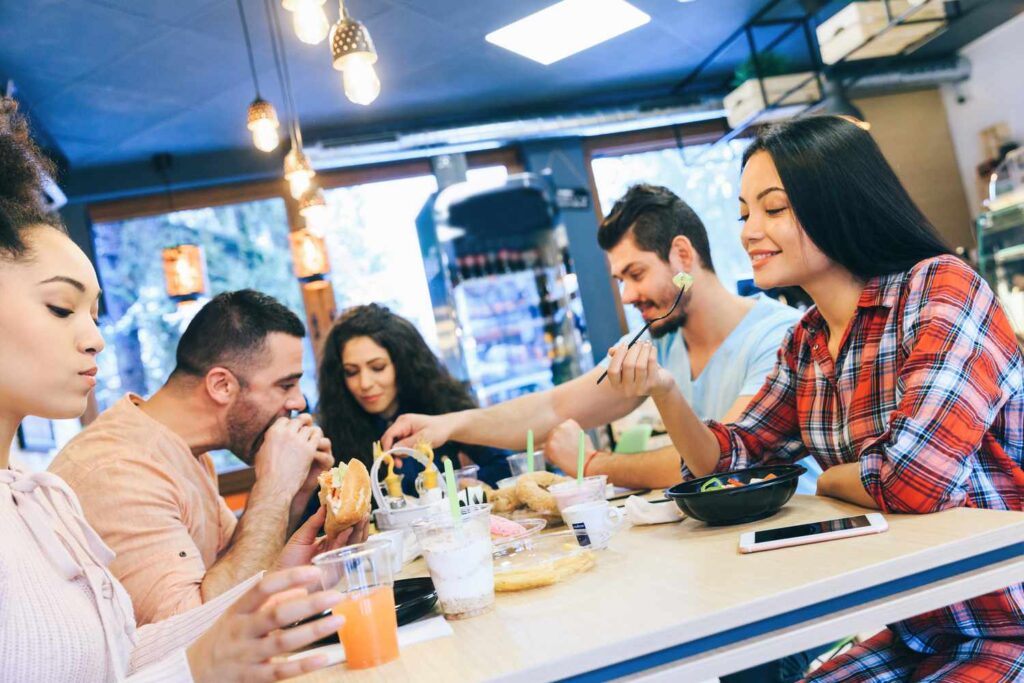
Here’s a question worth considering: if a customer has already eaten at your restaurant, ordered your food twice, and follows you on Instagram — why are they still placing their next order through DoorDash?
Because you haven’t given them a better option.
That’s the core problem. It’s not that customers prefer third-party apps. It’s that those apps made it incredibly easy to order from anywhere, and most restaurants haven’t matched that convenience on their own platforms.
A direct ordering strategy means:
- Your customers order from your website, app, or QR code — not a third-party interface
- You keep 100% of the revenue from those orders
- You own the customer relationship, their contact info, and their order history
- You control your menu pricing, promotions, and branding completely
The shift is already happening. Independent restaurants, chains, and cloud kitchens that invested in direct ordering channels are now seeing 20–40% of their delivery revenue come through commission-free channels. That’s money that would have gone to a platform staying in the business instead.
The technology to make this happen is no longer expensive or complicated. A modern digital menu software solution handles everything from QR codes to order management to payments — often for a flat monthly fee that’s a fraction of what you’d pay in commissions.
Top Benefits of Owning Your Own Ordering Channel
When you cut out the middleman, the benefits ripple across your entire operation.
1. Zero Commissions on Every Order
This is the most immediate benefit. When a customer orders directly through your system, you receive the full order value. On a $500 daily order volume, eliminating a 25% commission saves you $125 a day — that’s $45,000 a year.
2. You Own Your Customer Data
Third-party platforms never share customer data with you. When someone orders through DoorDash, DoorDash knows them — not you. With a direct ordering system, you collect names, emails, order histories, and preferences. That data is the foundation of every loyalty program, promotion, and re-engagement campaign you can run.
3. Complete Menu Control
You decide what’s on the menu, what’s featured, what’s discounted, and what gets promoted. No approval processes. No platform-mandated changes. No competing with your own menu items being promoted by a competitor on the same screen.
4. Faster Order Processing
Orders placed directly into your restaurant POS system arrive instantly and accurately. No manual re-entry. No third-party tablet adding clutter to your counter. Orders flow straight into your kitchen display or printer, reducing errors and wait times.
5. Better Customer Experience
A branded ordering experience — your logo, your colors, your voice — builds trust and loyalty in a way a generic third-party app never can. Customers who order directly feel like they’re interacting with your business, not a marketplace.
6. Promotions That Actually Work
When you own the ordering channel, you can run targeted promotions — happy hour discounts, loyalty rewards, combo deals — without sharing the margin with a platform. A 10% discount offered directly to your customers costs you 10%. The same discount offered through a delivery app might cost you 35% (10% discount + 25% commission).
Key Features to Look For in a Restaurant Management System
Not all restaurant tech is created equal. If you’re evaluating solutions to reduce your dependency on third-party platforms, here are the features that actually matter:
QR Code Ordering Customers should be able to scan a code at the table or from a flyer and place an order immediately — no app downloads required. Look for systems that let you update menu items in real time without reprinting anything.
Digital Menu Management A well-built QR menu system lets you add photos, descriptions, allergen info, and pricing. It should be easy to update and look good on any phone screen.
Direct Online Ordering Your customers should be able to order from your website for delivery or pickup. This is your commission-free alternative to DoorDash. The experience needs to be fast, mobile-friendly, and simple enough that a customer completes the order in under two minutes.
Integrated POS System An online ordering software that doesn’t connect to your point-of-sale creates double work. Look for a system where dine-in orders, takeaway orders, and delivery orders all flow into the same POS and reporting dashboard.
Inventory Management Every order should automatically update your inventory. When you run out of a menu item, the system should reflect that instantly — preventing customer disappointment and kitchen confusion.
Table Reservation Management If you run a sit-down operation, reservation management should be part of the same system, not a separate subscription you’re paying for elsewhere.
Reporting and Analytics You need to see what’s selling, what’s not, what time periods are busiest, and which tables or channels are most profitable. Good reporting turns data into decisions.
Multi-Location Support If you run more than one location, managing them under a single dashboard saves enormous time. Look for systems that let you set location-specific menus and pricing while viewing consolidated reports.
How a Digital Ordering System Improves Restaurant Efficiency
The operational benefits of a well-integrated digital ordering system go beyond just saving on commissions. Here’s what changes in the day-to-day running of a restaurant:
Fewer Order Errors When customers place their own orders directly — whether at the table via QR code or online — the chance of miscommunication drops significantly. The order is exactly what the customer typed. No misheard modifications. No lost tickets.
Faster Table Turns QR ordering lets customers browse the menu and order at their own pace without waiting for a server. Tables can order drinks and starters immediately on arrival, which speeds up the whole dining cycle.
Reduced Staff Pressure During Peak Hours When the floor is slammed, QR ordering absorbs some of the order-taking burden. Your staff can focus on food delivery, hospitality, and problem-solving — the things that actually require a human touch.
Real-Time Menu Updates Ran out of the salmon? Update the menu in 10 seconds and it’s reflected instantly on every customer’s phone. No crossed-out items. No awkward conversations.
Automated Inventory Deductions Every order places a demand on your stock. A properly integrated system tracks that automatically, alerting you before you run out of critical ingredients rather than after.
Centralized Reporting Instead of reconciling numbers from five different platforms and a physical POS at the end of each week, everything lives in one dashboard. That’s hours of administrative time returned to you every month.
Common Problems Restaurants Face Without the Right Tech
Many restaurant owners are running a genuinely great food operation on outdated or fragmented technology. The problems this creates are predictable:
Over-reliance on third-party platforms. When direct ordering infrastructure doesn’t exist, delivery revenue has nowhere to go except through commissions-heavy apps. This becomes structural — the longer it continues, the harder it is to change customer behavior.
Disconnected systems. A separate POS, a separate reservation system, a separate inventory tracker, and three delivery tablets on the counter — this is the reality for many independent restaurants. Each system has its own subscription, its own login, and its own way of doing things. Nothing talks to anything else. Staff waste time on data entry that should be automated.
No customer data. Without direct ordering, you’re flying blind on who your customers are. You can’t send them a birthday promotion. You can’t tell your regulars about a new menu launch. You can’t even identify who your most valuable customers are.
Pricing pressure. When your menu appears on Uber Eats alongside five competitors, customers make decisions purely on price. You end up either cutting margins or losing orders. Direct ordering removes you from that comparison environment entirely.
Cash flow problems. Third-party platforms pay out on their own schedule — often weekly or bi-weekly. Direct payments from customers hit your account much faster, improving day-to-day cash flow.
How to Choose the Right Solution
There’s no shortage of restaurant tech vendors making big promises. Here’s how to cut through the noise and choose a system that will actually deliver results:
Prioritize integration over features. A system with 50 features that don’t work together is worse than a system with 10 features that do. Ask specifically: does the QR ordering connect to the POS? Does the POS connect to inventory? Does inventory connect to the menu?
Check the commission structure. Some “direct ordering” platforms still charge per-transaction fees or percentage commissions. Look specifically for systems that charge a flat monthly fee with 0% commission on orders. That’s the model that actually protects your margins.
Evaluate setup and support. How long does it take to get live? What happens when something breaks during a Friday dinner rush? Make sure support is responsive and that the onboarding process won’t require weeks of technical work.
Test the customer experience. Before committing, order from the system as a customer would. Is it fast? Is it mobile-friendly? Does it look professional? The customer experience determines whether people will actually use it.
Look for scalability. If you have ambitions to open a second location, choose a system designed for multi-location management from the start. Migrating to a new platform later is painful and expensive.
Why QRTable Is the Best Choice for Restaurants
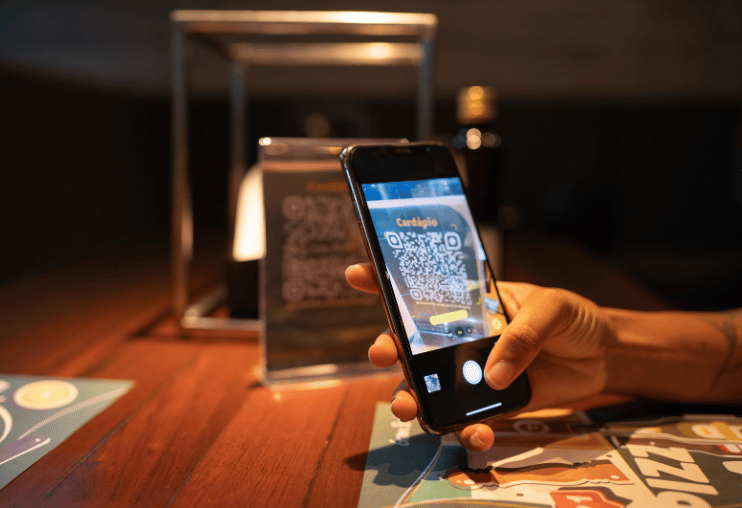
QRTable was built specifically to solve the problem this entire article is about: helping restaurants stop losing money to third-party commissions and start building a direct relationship with their customers.
Here’s what makes it stand out:
0% Commission on Every Order This isn’t a promotional offer — it’s the permanent model. QRTable charges a flat subscription fee. You keep every rupee, dollar, or dirham from every order. No percentage cuts. No hidden transaction fees.
All-In-One Platform QRTable combines QR code ordering, digital menu management, online ordering, POS, inventory tracking, table reservations, and a reporting dashboard in a single system. One login. One subscription. One place where everything lives.
QR Code Ordering That Works Customers scan, browse, and order without downloading anything. The menu is visual, fast-loading, and easy to navigate on any smartphone. Updates happen in real time — the moment you change a price or mark an item as unavailable, every customer sees it immediately.
Direct Online Ordering Channel Your branded online ordering page is your commission-free DoorDash alternative. Customers bookmark it, share it, and come back to it — because it’s your brand, not a marketplace. Every order through this channel goes directly to you.
Integrated restaurant management software Dine-in orders via QR, takeaway orders via your online page, and delivery orders all funnel into the same POS and reporting system. Your staff sees everything in one place. Your end-of-day numbers reconcile automatically.
Multi-Location Ready Whether you run one restaurant or twenty, QRTable’s multi-location management lets you oversee everything from a single dashboard while keeping location-specific menus, pricing, and reporting intact.
Fast Setup You don’t need a developer or an IT team to get started. QRTable is designed for restaurant operators, not tech professionals. Most restaurants are live within a day.
Real Use Cases: What This Looks Like in Practice
Independent Café, Urban Setting
A 40-seat café was running 60% of its takeaway orders through Uber Eats at a 28% commission. After launching direct ordering through QRTable, they promoted their QR menu on their counter, receipt footers, and Instagram. Within 90 days, 45% of takeaway orders had shifted to the direct channel. The owner calculated a monthly saving of over $1,800 in commissions — more than enough to offset the QRTable subscription cost many times over.
Cloud Kitchen Operation
A cloud kitchen running three virtual brands had separate systems for each brand — different tablets, different reports, different reconciliation headaches. Moving everything to QRTable’s restaurant management software unified operations under one dashboard. The kitchen manager could see all three brands’ orders in real time. Inventory deductions became automatic. The owner’s monthly admin time dropped by an estimated 12 hours.
Restaurant Chain with 5 Locations
A regional chain used QRTable’s multi-location management to standardize menus across all five sites while allowing each location to run local promotions. The central management team accessed consolidated sales reports without needing each manager to compile and send data manually. The QR ordering system at tables reduced server workload during peak lunch service by approximately 30%.
Cost vs. ROI: The Numbers That Matter
Let’s look at this practically, using conservative numbers:
Scenario: Restaurant doing $20,000/month via third-party platforms
| Third-Party Platforms | With QRTable | |
|---|---|---|
| Monthly Revenue | $20,000 | $20,000 |
| Commission (25%) | -$5,000 | $0 |
| QRTable Subscription | $0 | -$99 (approx.) |
| Net Revenue Kept | $15,000 | $19,901 |
| Annual Difference | +$59,412 |
Even if you only shift 50% of your delivery orders to direct channels, you’re looking at a meaningful five-figure annual improvement.
The math isn’t complicated. The question is how long you want to keep the current arrangement.
There’s also the less quantifiable value: owning your customer data, controlling your brand experience, and building a business that isn’t dependent on the goodwill of a platform that could change its fee structure tomorrow.
Frequently Asked Questions
Will my customers actually use a QR ordering system?
Yes — and the adoption is typically faster than restaurant owners expect. QR codes became mainstream during the pandemic, and customers now scan them without hesitation. The key is making sure the experience is smooth on mobile. QRTable’s system is optimized for mobile ordering, which removes the main friction point.
How do I get customers to order directly instead of through DoorDash?
The transition requires some active promotion. Place QR codes on tables, receipts, packaging, and social media. Offer a small incentive for first-time direct orders — a free drink, a discount, bonus points. Most customers will switch once they realize direct ordering is just as easy and sometimes faster.
Does QRTable replace my existing POS?
QRTable includes a full restaurant POS system, so yes — it can replace a standalone POS. If you already have an existing setup you’re deeply tied to, it’s worth having a conversation with the QRTable team about integration options.
What if I still want to keep DoorDash for some orders?
You don’t have to quit third-party platforms entirely. Many restaurants maintain a presence on those platforms for brand discovery while driving repeat customers to direct ordering. The goal is to reduce commission dependency over time, not necessarily eliminate the platforms overnight.
How long does setup take?
Most restaurants are fully live with QRTable within 24–48 hours. The menu setup is straightforward, and the QR code is ready to print and deploy immediately.
Is there a contract?
QRTable typically operates on monthly billing with no long-term lock-in. Check the current plan details at qrtable.io for the most up-to-date information.
Can I manage multiple locations?
Yes. QRTable’s multi-location management is built for restaurant groups and chains. You get a unified dashboard with location-specific control where you need it.
What happens to my inventory data?
Every order automatically updates your inventory in real time. You can set low-stock alerts, track ingredient usage by dish, and generate purchase order reports — all from within the platform.
Conclusion
The commission economy built by DoorDash, Uber Eats, and similar platforms was never designed with restaurant profitability in mind. It was designed to create dependency. And for years, it worked — because restaurants didn’t have a convenient, affordable, and customer-friendly alternative.
That alternative now exists.
A properly implemented QR ordering system gives your customers the convenience they expect and gives you the margins your business needs to survive and grow. It’s not about being anti-technology. It’s about choosing the right technology — technology that works for you, not against you.
The restaurants winning right now aren’t necessarily the ones with the best food (though that helps). They’re the ones running tight, smart operations with direct customer relationships and real control over their revenue.
QRTable gives you that control.
Ready to Stop Paying Commission?
Every day you wait is another day of margin walking out the door.
Start your free trial at QRTable.io →
See how quickly you can set up your digital menu, launch direct ordering, and start reclaiming the revenue that’s currently funding someone else’s platform.
No long contracts. No percentage cuts. Just your food, your customers, and your profits.